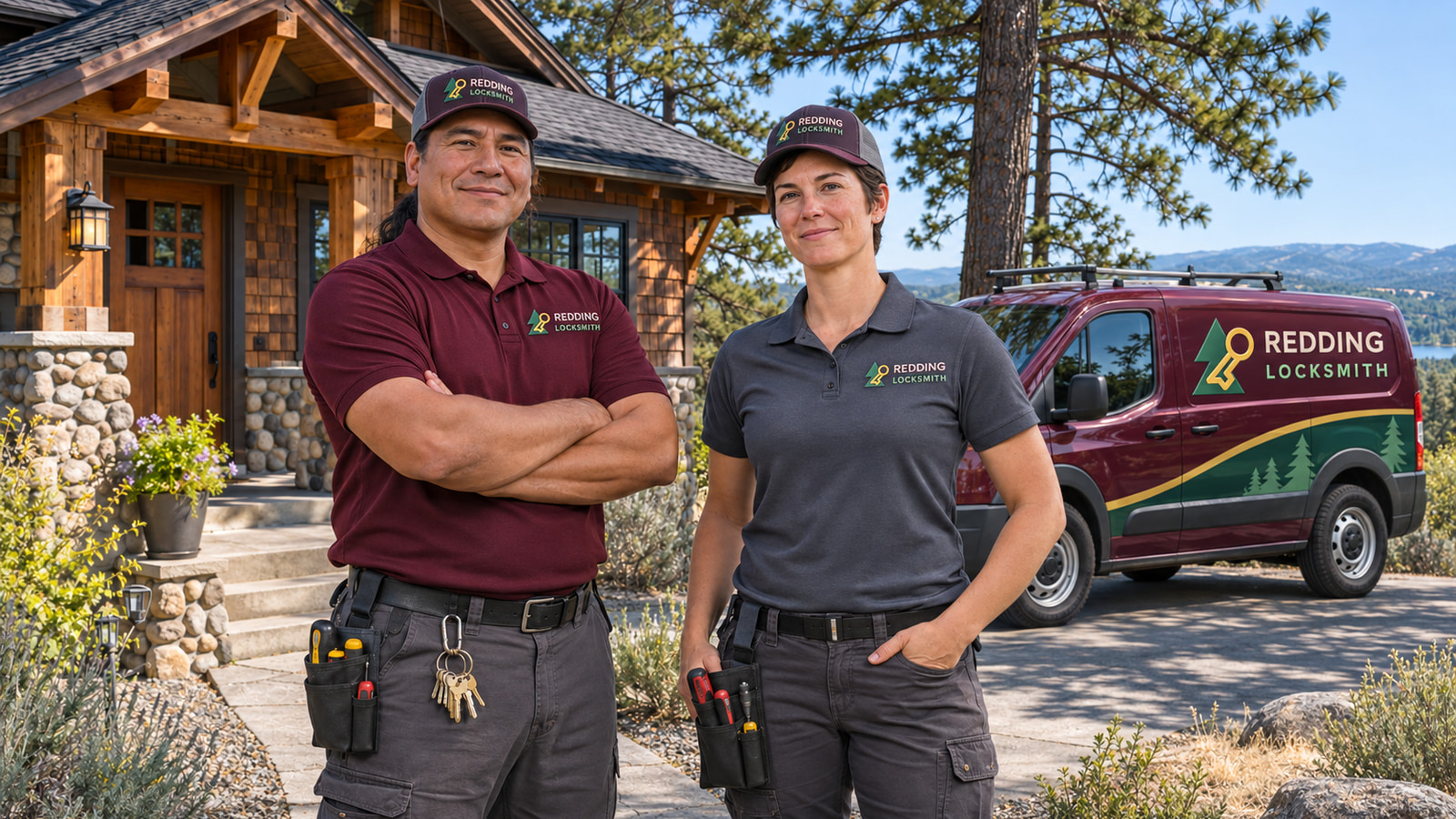
What a ranch home usually has
The ranch house is one of the most recognizable homes in the western United States. It is typically a single story, long and low, with a gently sloped roof, an attached garage and a layout that spreads the rooms along a single level. Many were built in the middle of the last century, when growing families needed practical space and a yard. In and around Redding, neighborhoods of these homes sit alongside newer subdivisions and rural parcels, and many have been lovingly maintained, remodeled or left much as they were. Whatever the condition of the house, the hardware often tells a story about when it was built and how it has been treated since.
The first thing to know is that original hardware from that era was designed for a different world. Locks were meant to keep the door closed and to provide basic privacy. The idea of a determined forced entry was less of a design concern. As a result, many doors have a knob with a push button lock, a thin latch bolt that extends a half inch, and a strike plate fastened with short screws into soft wood. Over decades, that combination loosens, wears and, in many cases, has been replaced piece by piece with newer parts that do not match the rest.
A typical ranch home has a front door, a back or kitchen door, a door from the garage to the house, and one or two sliding glass doors opening to a patio or yard. Some have a side door by a carport. Each has its own history. The front door may be solid wood, with a modest deadbolt added later. The back door may be a lighter door with a glass panel. The garage entry door may be hollow core, since it was originally considered an interior door. The sliders may still have their original latches, which are among the weakest points in the house.
The wood itself ages. Door frames made of softwood dry, crack and swell with seasons. In Redding, hot dry summers can shrink wood, and wet winters can swell it. Over many cycles, doors drop on their hinges, rub the frame and fail to line up with the strike. The lock may still work in theory, but the door no longer closes the way it once did. This leads to a pattern: the deadbolt has to be lifted, or the door has to be slammed, or the latch only catches halfway. These are signs of a door that needs attention.
Fortunately, ranch homes are generally good candidates for improvement. Their doors are standard sizes, their frames are usually accessible, and their hardware can be updated without changing the look of the house. The key is to understand what you have and to make changes in the right order. The sections that follow walk through each door type, windows, upgrades and a simple plan.
This guide is for owners and residents working on their own homes. If you are locked out or need a lock replaced on a house you own or live in, a locksmith can help once you show that you are authorized to request the work.
Front doors and old knob sets
Start with the front door, because it is the one most people think about and the one with the most variety. Older ranch homes may have a heavy solid wood door, sometimes with a small window or a decorative panel, or a flush door with a smooth face. The original lockset was often a knob with a keyed cylinder in the center and a latch bolt that slides in and out. The latch bolt is the spring loaded piece that holds the door closed. It is beveled so the door can slam shut, which makes it easy to open with a thin tool in some designs. That is why a separate deadbolt is the usual recommendation.
A deadbolt has a square bolt that extends straight into the frame and does not retract by pressure. A good one extends one inch or more. Many ranch homes have had a deadbolt added over the years, but the quality varies. Look at yours. Does the bolt extend fully when you turn the key? Does it align with the hole in the frame? Does the key turn smoothly? If you have to lift or push the door to make it lock, the door is out of alignment, and the fix is to adjust hinges or the strike, not to force the lock.
The strike plate and the frame matter as much as the lock. A strike plate is the metal plate on the frame that receives the bolt. On older homes, it is often a small plate held by short screws that go only into the thin trim. Replace those with screws that are three inches long, so they reach the structural stud behind the frame. This simple change, explained further in the guide on strike plates and three inch screws, dramatically increases the force needed to kick the door open. A reinforced strike plate with a longer lip adds more strength.
Check the hinges. Older hinges may have worn pins, and screws may have loosened in softened wood. Tighten loose screws, and if the holes are stripped, fill them with glue and wood slivers or use longer screws. A door that sags on its hinges will rub and may not latch. Adding one long screw per hinge, driven into the framing, also helps. If the door has three hinges, the top hinge carries much of the load and is often the one that loosens first.
If your front door has a sidelight, a narrow window next to it, consider the glass. A deadbolt near a pane of glass can be reached if the glass is broken. Security film can hold glass together, and a deadbolt placed away from the glass or a keyed deadbolt on the inside may help, balanced against the need for a quick exit in a fire. Think about what is right for your household.
Finally, consider replacing a worn knob set with a lever handle. Levers are easier for people with arthritis or limited strength. They come in finishes that match the era. A new set with a matching deadbolt can give the door a fresh, cohesive look while improving function. Choose hardware designed for durability rather than a lightweight model that will wear out quickly.
Back doors, slider doors and garage entries
The front door gets the attention, but burglars often prefer the back. A rear door is hidden from the street, often closer to a fence or hedge, and may have a weaker lock. In a ranch house, the kitchen door or a door from the family room may have a simple knob lock and a thin frame. If the door has a glass panel, the glass is within reach of the lock. Treat the back door with the same seriousness as the front. Install a deadbolt, reinforce the strike plate and frame, and consider a solid door in place of a hollow one.
The door between the garage and the house deserves special notice. Many were built as interior doors, hollow in construction, with a basic latch. Yet this door connects to a space that may be easy to enter if the overhead door or a side door is breached. Upgrade to a solid core or metal door, add a deadbolt and a reinforced frame. If the door leads into the kitchen or laundry room, make sure it closes and latches automatically, as required in many homes for safety reasons, and keep it locked when you are away.
Sliding glass doors are common in ranch homes, opening to a patio, a deck or a pool area. Their latches are typically small hooks that engage a catch on the frame. They can be lifted out of the track or forced with a pry tool. Several improvements help. A bar in the track, cut to length, prevents sliding. A pin through the frame stops the door from lifting. A secondary lock, mounted on the frame, adds a keyed or thumb turn barrier. Check the rollers and track. Worn rollers can let the door be lifted or lead to a door that does not close tightly.
Glass itself is a concern. Large panes can be broken, so some owners add security film that holds the glass together after impact. Others choose laminated glass when replacing a door. Curtains or blinds reduce visibility, which lowers temptation. In Redding's sunny climate, window coverings also help with heat, so you gain comfort as well.
Pet doors and side gates are part of the picture. A pet door can be an opening large enough for a person to reach through to a lock. Position the door away from the lock, or choose a model that locks. Side gates should latch with a lockable hasp, since the yard is part of your security. A gate that can be opened from outside allows access to the back door and windows.
Carport or side entries often have lighter doors and simple locks. Treat them like any other entry. A deadbolt and reinforced frame are the standard. If a door is rarely used, it may be neglected, so check that its lock operates. A stuck lock on a seldom used door is a common find during a home walk through.
Windows and wood frames
Windows in older ranch homes come in many forms. Some have original aluminum sliders, with small latches that can be rattled open. Others have wood double hung windows, with sash locks that have loosened over the years. Still others have been replaced with newer vinyl units. Each type has different security qualities. The first step is to walk through the house and test every window. Close it, lock it, and try to open it from inside by pushing and lifting. A window that moves is a weak point.
Aluminum sliders can be strengthened with a pin or a screw through the frame, a bar in the track or a window lock designed for sliders. A simple device that prevents the sash from lifting out of the track also helps. Make sure the lock engages fully and the window sits square in the frame. Worn tracks and rollers can leave gaps, and a locksmith or window specialist can advise on repair.
Wood double hung windows are charming, and many owners want to preserve them. Their sash locks can be replaced with new ones that grip more firmly, and a pin or a keyed sash lock can hold the window shut. Wood can swell and shrink, so check that the sashes close fully. Painted shut windows may be secure but are an exit hazard in a fire, so make sure at least one window in each bedroom opens easily.
Wood frames in doors and windows age differently from newer materials. Dry rot can set in where water collects, especially at the bottom of the frame. Press a screwdriver gently into suspect areas. If it sinks in, the wood is soft and will not hold a screw. Repair or replace damaged sections before adding hardware. Locks fastened to rotten wood are decoration only. A carpenter can repair the frame, and a locksmith can then reinforce the lock area.
Consider the exterior. Shrubs under windows can hide a person, while a clear, open view discourages trouble. Trim plants and keep a clear sightline from the street and neighbors. Motion lights near windows and doors help. Gravel under windows makes noise when walked on. Small touches add up.
Finally, remember fire safety. Bars on windows must have a quick release from the inside. Do not block exits. In a single story home, windows are an important escape route, so keep at least one window per bedroom easy to open from the inside. Balance security and safety with care.
Updating without losing the look
Many owners of older ranch homes love the character of their houses and do not want to change it. Good news: improving security rarely requires altering the look. Hardware comes in finishes and styles that suit mid century design, from simple black to brushed metal to warm brass tones. A new deadbolt in a matching finish sits quietly beside an existing handle. Reinforcing a strike plate is invisible once the door is closed. Longer screws look the same as shorter ones. Many improvements are hidden inside the frame.
Rekeying is a useful tool. If you have moved into an older home and do not know how many keys exist, rekeying changes the lock so that old keys no longer work. It keeps the existing hardware, so the look stays the same. A locksmith can rekey all exterior locks to one key, which is convenient. This is a sensible first step for a new owner and a practical response to lost keys. The rekeying service page explains the process.
If hardware is worn beyond repair, replacement may make sense. Choose sets that match the existing style. Look at the backset, the distance from the edge of the door to the center of the lock bore, and the bore size. Most modern locks fit standard bores, so replacement is usually straightforward. If the door has an unusual cutout, a locksmith can help find a matching set or adapt the door.
Consider adding conveniences without changing the appearance. A keypad deadbolt can replace a standard deadbolt and look much the same. It offers codes for family members and removes the need for a spare key. A lever handle can improve accessibility. A storm door or screen door with a good latch protects the main door from weather. In Redding's hot summers, a screen door lets you enjoy fresh air, and a lockable latch keeps it secure.
For doors that have lost their shape, repair may be better than replacement. A door that has dropped can be rehung. A cracked jamb can be reinforced. A hollow core door can be replaced with a solid one in the same style. A carpenter and a locksmith can work together so that the door, frame and lock operate as one system. Such work preserves the character of the house while improving performance.
Finally, think about future needs. If you plan to sell, a tidy, functional set of locks is attractive to buyers. If you plan to age in place, accessibility matters. Levers, keypad entries and well lit doors serve those goals. A little planning now avoids rework later.
A walk through and a sensible plan
A simple walk through can turn this guide into action. Set aside an hour, carry a notepad, a screwdriver and a flashlight, and move through the house door by door and window by window. For each door, note the lock type, test the deadbolt, look at the strike plate, check the hinges and see whether the door closes smoothly. For each window, test the latch and the movement of the sash. Write down what you find.
Then sort the notes into priorities. Safety issues come first: doors that will not close, windows that will not open from inside in an emergency, rotted frames and loose hinges. Next come security improvements: deadbolts, longer screws, reinforced strikes, slider bars and window pins. Last come comfort and style improvements: new handles, finishes, keypad locks. This order keeps your effort focused where it matters.
Consider a worked example. A family buys a ranch home from the middle of the last century. On the walk through they find a front door with a deadbolt that must be lifted to turn, a kitchen door with a hollow core and a knob lock, a garage entry with no deadbolt, and a slider with a loose hook latch. They start by having all exterior locks rekeyed to one key, since they do not know who has old copies. They replace the strike plate screws with three inch screws on every exterior door. They adjust the front door hinges so the deadbolt turns freely. They add a deadbolt to the garage entry and swap the hollow kitchen door for a solid one. They put a bar in the slider track and a pin through the frame. The whole effort takes a few weekends and some modest purchases, and the house feels more solid every time they close a door.
Keep a record. Write down what you did and when, and keep a list of keys and who holds them. Take photos of the improvements. This helps if you sell, if you file an insurance claim or if you simply forget what you changed. Store spare keys in a safe place and avoid hiding them near the door.
Know when to call a professional. If a door is badly out of square, if a frame is rotted or if a lock is seized, an expert can save time and frustration. A locksmith can rekey, repair, replace and install locks, advise on hardware and reinforce doors. They will ask for proof that you own or live at the property, and a quote follows a conversation about what you have. Larger jobs may need an on site visit.
Ranch homes are sturdy, friendly houses with plenty of life left in them. A few thoughtful changes to locks, strikes, hinges and latches can bring the hardware up to modern expectations without erasing the character that made you love the place. Start with the front door, move around the house, and enjoy the quiet confidence of a home that closes up properly each night.