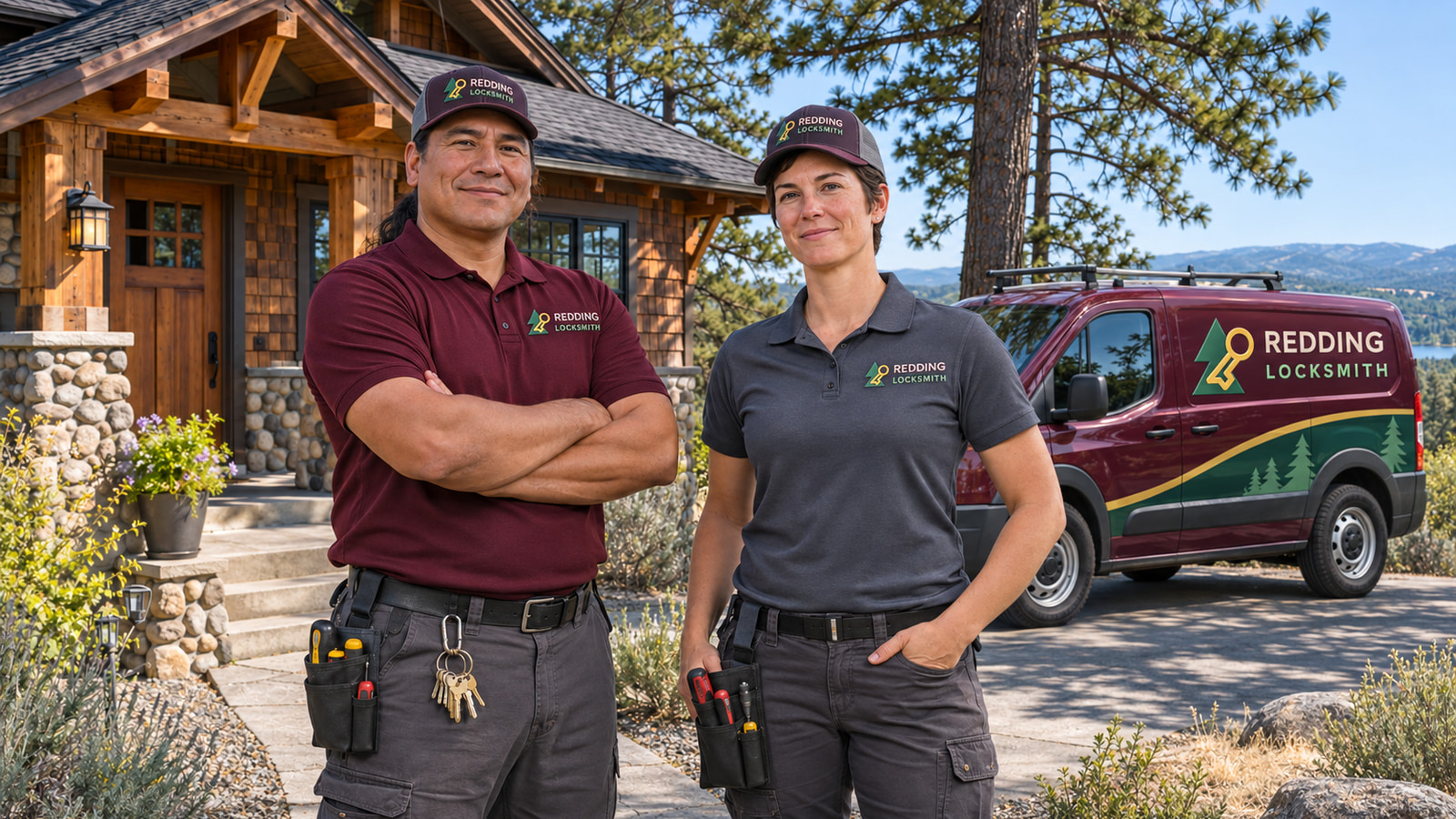
Two people, one door, and why the question comes up so often
A lock on a rental door sits in an unusual place. The owner of the property owns the door, the frame, and the hardware. The person renting has the right to live behind that door, to come and go, and to expect that their home is private. Both of them care about the lock, for different reasons. The owner wants to protect an investment and to be able to reach the property in an emergency or when the agreement allows. The occupant wants to know that people they did not invite cannot walk in. Questions about lock changes almost always come from the gap between those two perspectives.
Before anything else, a clear statement: this page is general education from a locksmith, not legal advice. Rules about rentals vary by state and sometimes by city, and they depend on the written agreement between the parties. California has its own body of tenancy law, and the details of what an owner or a tenant may do with locks are matters for that law and for the lease itself. If there is a dispute, the right sources are the lease, the state's tenant and landlord information resources, a local housing or legal aid office, or an attorney. What we can do is explain how the hardware side usually works and what sensible people in these situations commonly do.
The first practical truth is that most trouble in this area comes from surprises, not from lock hardware. A tenant who changes a lock without telling anyone creates a problem the first time the owner needs to reach the unit for a repair. An owner who changes locks without notice can leave a tenant locked out of their own home. Both situations are avoidable with a short conversation and a note in writing. Good property relationships tend to treat the lock as a shared tool rather than a contest.
It also helps to separate three questions. Who has the right to be on the property? Who is allowed to alter the hardware? And who is responsible for the cost? The answers depend on the lease and on the law, and they may differ for a single family house, an apartment in a complex, a room rented in a larger house, and a unit within a managed building. A locksmith cannot answer these questions for you, but we can keep them in view, because they affect who we can serve and how.
One more point is worth stating up front. A locksmith generally needs to know that the person asking for work has the right to ask for it. Lockouts and rekeying are for owners and authorized occupants who can show they belong at the property. For a rental, that might mean a lease or a utility bill in the occupant's name, or an authorization from the owner or manager. We ask because it protects everyone, including the person we are speaking with.
When a tenant wants the locks changed
People who rent often have good reasons to want new locks. They may have moved into a unit where previous residents, former roommates, or maintenance staff once held keys. They may have lost a key and do not want a stray copy floating around. A relationship may have ended, and the person who left still has a key. Someone may have felt unsafe after a break in nearby. All of these are real and understandable.
The practical path starts with the lease, since many leases say something about alterations, including locks. Some require the owner's consent before any change. Some allow tenants to rekey on their own as long as a copy of the new key is provided. Some say nothing. Whichever applies, the sensible first step is to ask the owner or manager and to get the answer in writing, even if it is only a short message. A simple note saying you would like to change or rekey the lock for safety and will provide a new key is polite and usually effective.
If the owner agrees, ask what type of work they prefer. Rekeying keeps the existing hardware and changes how the inside of the lock responds to keys, so the old keys no longer work. Replacing the lock puts new hardware on the door. Rekeying is usually the lighter touch, and it often suits owners because the hardware stays the same and the finish matches the rest of the property. We explain the difference further in a separate guide on rekeying versus replacing.
What if the owner does not respond, or says no? Without getting into legal territory, it is worth saying that lock changes done without permission can create problems under a lease, and in some cases the owner may be entitled to a copy of the key or to restore the original arrangement. A tenant who feels unsafe should consider contacting the owner urgently, explaining the concern, and if there is an immediate danger, contacting local authorities. For ongoing questions about what a tenant is entitled to, local tenant resources are far better placed than a locksmith to help.
Tenants should also think about what they are installing. Some tenants like to add a keypad deadbolt, a smart lock, or a chain. Anything that changes the door should be discussed with the owner, who may need to be able to enter in case of emergency. Keypad locks can be a gentle compromise because codes can be shared with the owner, though the owner should know exactly how access is arranged. A lock the owner cannot open is a lock the owner will object to.
Finally, a note for roommates. In a shared rental, every person on the lease usually has the same right to a key. Changing a lock to exclude one roommate who still has a right to be there is a matter for the lease and the law, not for a quick key swap. If a roommate has moved out or has been removed from a lease, rekeying the lock is often a reasonable step, but it should be arranged through the owner or property manager.
When the owner wants new locks between tenants
From the owner's side, the moment between one resident and the next is the natural time to rethink the locks. Many owners and managers treat it as routine good practice to change or rekey the locks whenever a unit turns over. The reasoning is straightforward. Every key that was ever handed out, including copies made by the former resident, is a possible way in. Rekeying removes all of those possibilities at once, usually at modest cost compared with the problems that can result from an unknown key.
Doing it well means planning. A tidy process might include the following steps:
- Decide in advance who will be responsible for lock changes on turnover, whether it is the owner, a property manager, or a maintenance contractor.
- Schedule the work after the previous resident has returned all keys and before the next resident takes possession.
- Count how many keys each lock will have and who will hold them, including a managed set for the owner or manager.
- Keep a simple log: which doors were rekeyed, on what date, how many keys were cut, and who received them.
- Label key sets clearly in a way that does not reveal the address to anyone who finds them.
Owners who manage several units sometimes ask about keyed alike arrangements, where the same key works several doors, or master key systems, where a master works all locks and individual keys work only one. These are tools with trade offs. They are covered in our guide on keyed alike systems and record keeping. For now, the main idea is that convenience for the owner can reduce privacy for the tenant, so such systems deserve care and clear rules about who holds the master.
For Redding area owners, there is another seasonal angle. Many rentals around Shasta County turn over in late spring and late summer, when schools and seasonal work shift. Keeping lock changes on a routine calendar helps avoid the scramble of a same day move in with an unchanged lock. Rural rentals with gated drives or outbuildings add more keys to the list: gates, sheds, barns, and shop doors. A turnover plan should walk the whole property and not only the main house.
It is also worth thinking about the hardware itself. Locks in rentals take wear. Tenants come and go, and doors are slammed, kicked open in moves, and handled by many people. Owners are often better served by solid, simple hardware that can be rekeyed than by delicate or elaborate options. Deadbolts with a standard cylinder, for example, are straightforward to rekey, easy to match, and widely understood. We can discuss what suits your units when you call.
Finally, owners should be mindful of when they enter. Many rental arrangements limit how and when an owner may enter a occupied unit, usually requiring notice except in emergencies. Having a key does not remove that responsibility. The best owners treat the key as a tool for maintenance and safety, not as an invitation to drop in.
Rekeying or replacing, and which one suits a rental
For a rental, the choice between rekeying and replacing a lock usually comes down to three things: the condition of the hardware, the budget, and how consistent the owner wants the doors to be. Here is how each approach works in plain terms.
Rekeying leaves the lock body in place. A cylinder contains a set of small pins, and each pin must be lifted to a precise height for the key to turn. When we rekey, we take out the existing pins and install new ones sized to a new key. The old key, which had its cuts matched to the old pins, no longer lifts the new pins correctly, so it will not turn the cylinder. From the outside, the lock looks exactly the same. It simply answers to a different key. This is a common choice for turnover because it is quick and does not change the look of the door.
Replacing a lock means removing the old hardware and installing new. It makes sense when the lock is worn, damaged, or of poor quality, when the finish is failing, when the tenant or owner wants a different security level, or when the old lock cannot be rekeyed. A deadbolt that has been forced, a handle set that sags, or a latch that has begun to stick are all signs that replacement may be wiser than rekeying. Replacement also offers a chance to improve strike plates, screw lengths, and the fit in the door.
Smart locks and keypads sit in a special category in rentals. They can simplify turnover, because a code can be changed without cutting a key, and they can give the owner a record of entries. But they raise privacy questions, they rely on batteries and sometimes networks, and they require a clear agreement about who controls the code and the app. If you are an owner thinking of using them, discuss it with tenants beforehand. If you are a tenant who wants one, ask. We have a separate guide on smart lock privacy and data that covers what these devices store.
A few details often surprise people:
- Rekeying does not change who has copies of the new key. It is up to the people receiving new keys to keep them safe.
- Some locks have limits on how many times they can be rekeyed or on how the pins are arranged, which a locksmith can check.
- Mixed brands across a property can make rekeying to a single key more difficult, because different cylinders may use different key shapes. Planning ahead avoids that.
- Exterior doors, sliding doors, garage entries, and gates may each need attention, not only the front door.
We do not promise prices in a general article, but we are happy to talk it through by phone. Describe how many doors, what kind of locks, and what the goal is, and we will tell you what we would suggest and whether a visit is needed. If the situation is more complicated, such as many doors, older hardware, or a mixed set, an on site look is the honest way to scope it.
Shared housing, family situations, and other tricky cases
Not every rental is a tidy arrangement between one owner and one household. Some situations call for extra thought, and we want to be honest about them.
Rooms rented within a larger home often involve a lock on the bedroom door as well as the front door. The person renting a room generally expects a private space, while the owner or master tenant expects to maintain the house. Agreement about who holds which key is the key to peace. Bedroom locks are often privacy locks, meant to give a feeling of privacy rather than strong security, and they should be easy to open from outside in an emergency, which is part of good safety practice. We can talk about what suits your layout.
Family situations can be delicate. After a separation, someone often asks to change the locks on a shared home. Whether that is appropriate depends on who is on the lease or deed, on any court order, and on the law. We cannot determine that for you. We may ask for proof that you have the right to be at the property and the right to change it, and in some cases we may suggest you speak to the owner, a property manager, or a legal resource first. This is not to be difficult. It is because a lock change that locks out someone who has a right to be there can cause serious harm.
Emergency situations, such as break ins, are different in urgency but not in principle. If a door has been damaged or a lock has been compromised, securing the property quickly matters. The person who calls should still be someone with authority over the property. A tenant can usually arrange for the repair and notify the owner immediately. A manager can arrange it on the owner's behalf. We will often note the condition of the door so everyone has the same picture.
Short term and seasonal rentals bring their own pattern. Rentals near Lake Shasta, Whiskeytown, or other recreation areas near Redding may see frequent guest changes. In those settings, keypad locks with changeable codes are popular because they avoid physical keys going astray. Owners should still keep clear instructions, change codes between stays, and make sure guests know how to leave the property safely. Again, any lock that can be opened with a code should have an inside release that works for everyone.
Rural rentals with gates, long drives, and outbuildings add a final layer. The tenant may be responsible for the house while the owner keeps the barn, the pump house, or a stored vehicle. Locks on outbuildings are often a separate topic from locks on the house. It helps to write down which doors and gates are included in the rental, who holds keys for each, and what happens if one is lost. A single page in the lease or in a shared note avoids a surprise.
When you find yourself in any of these cases, the same principle applies. Talk first, write it down, and bring in a locksmith to carry out the plan. Lock work is easy once everyone agrees on who is entitled to do what.
Records, key handling, and what to do next
Good record keeping is the part of lock management that people skip and later wish they had not. For a rental, it can be as simple as a page that lists each door, the date the lock was last rekeyed or replaced, the number of keys cut, and who received them. Keep it somewhere safe, and update it each time anything changes. In a dispute, a plain log is more persuasive than anyone's memory.
Here are habits that help owners and tenants alike:
- Put lock arrangements in writing, including who may change them and what notice is expected.
- Collect every key at move out and compare the count to your log.
- Do not stamp addresses on key tags. If a key is lost, a label with an address is an invitation.
- Ask for a receipt or a short work note after any lock change.
- Test every lock after a change, from both sides, including after the door has been shut and opened a few times.
- Keep inside release hardware working so that anyone inside can leave easily.
If you are a tenant, remember that the goal is to feel safe and to keep a good relationship with the person who owns your home. A polite request, a clear reason, and an offer to share the new key almost always works better than acting alone. If the owner cannot be reached and you have a genuine safety concern, document the situation, and consider contacting local resources for tenants or the authorities, depending on the circumstances.
If you are an owner or manager, build lock changes into your turnover routine and be transparent with residents about who holds keys. Consider simple, serviceable hardware, and think carefully before adopting systems that let many people have access. Respect the privacy of residents, and keep your own copies secure.
When you call us, expect a practical conversation. We will ask what the property is, how many doors are involved, whether the work is rekeying or replacement, and what proof of authorization is available. We will talk through what you want to achieve and tell you what we think makes sense. Simple jobs are often described well enough over the phone to give a clear picture, while larger or more complex jobs call for a visit. We do not give legal advice, and when a question is really about the lease or tenancy law, we will say so and suggest you look to the proper resource.
In the end, a lock on a rental is a shared responsibility. Done thoughtfully, it protects the resident, supports the owner, and keeps everyone on good terms. If you have a rental in Redding or elsewhere in Shasta County and want to talk through your options, we are glad to help.