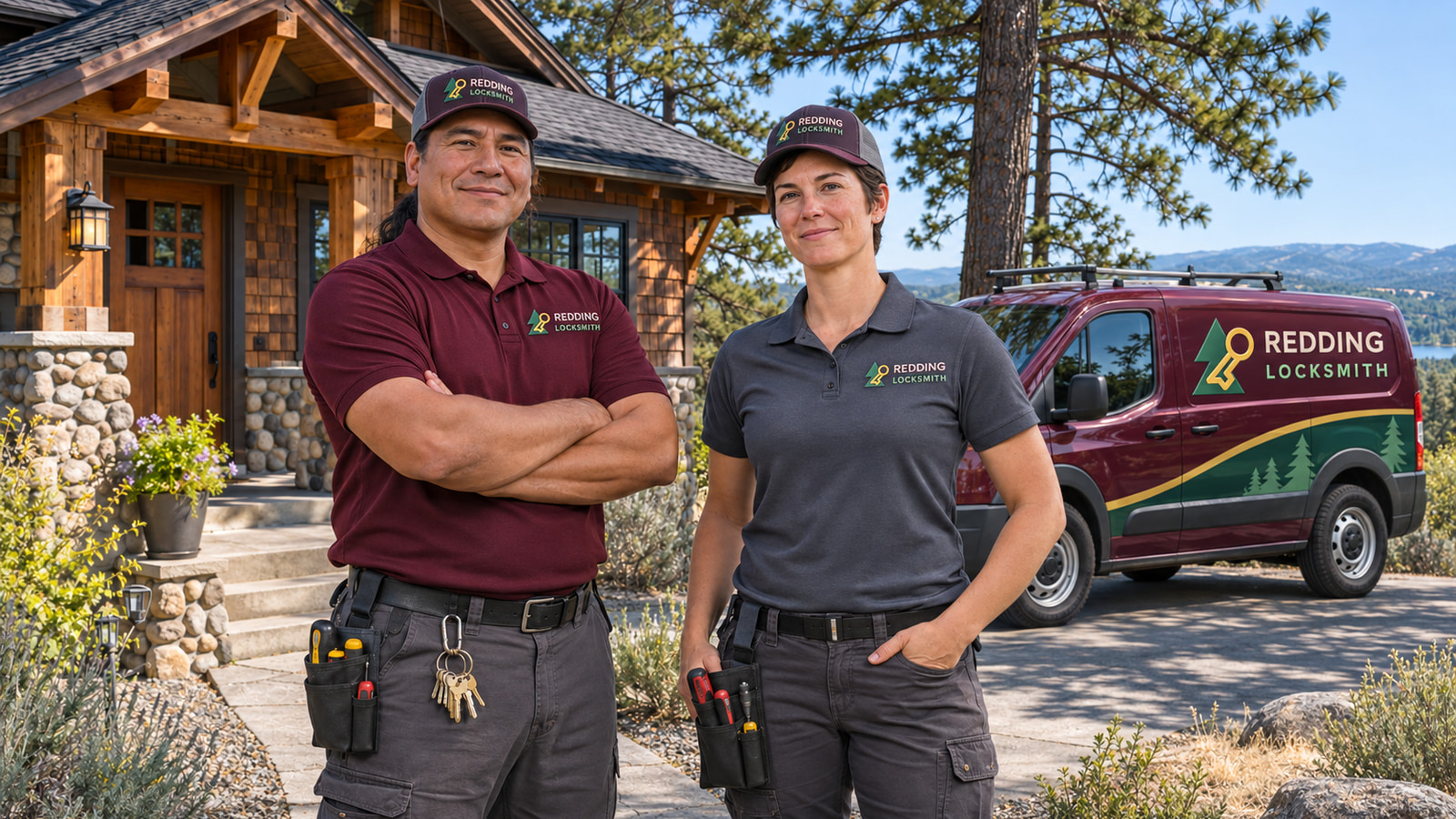
Why acreage needs a layered plan
A house in town has a short path from the street to the door. Neighbors can see it, a streetlight covers it, and anyone approaching is noticed within seconds. A house on several acres at the end of a long driveway is a different situation. The distance gives you privacy and quiet, which is the reason many people choose the life in the first place. It also means that nobody may see a vehicle turn in, and that a lot of valuable things sit far from the house: tools, a tractor or utility vehicle, a trailer, firewood, feed, fuel, and sometimes animals.
The sensible response is to think in layers, like the rings of an onion. The outermost layer is the property line and the driveway entrance. The next layer is the area around the buildings. The third is the outbuildings themselves, and the final layer is the house. Each layer does one job. The outer ring tells people that this is private property and slows down casual entry. The middle ring makes it harder to approach buildings unnoticed. The buildings hold the valuable things behind real locks. The house holds the people.
No single layer has to be perfect. A gate does not need to stop a determined intruder, because a gate is mostly a signal and a delay. A padlock on a shed does not need to be unbreakable, because it works together with lighting, distance, and being seen. What matters is that the layers add up, so that a person who gets past one still faces another, and so that the effort needed to reach anything valuable is greater than the reward.
This way of thinking also keeps costs sensible. You do not need to spend heavily at every point. Spend where it counts: a strong gate latch at the road, solid hasps on the buildings that hold equipment, a proper deadbolt on the house, and a key plan that you can manage. A locksmith can talk through a layered plan by phone, and a complicated property, with several buildings and different kinds of doors, is best handled with a visit so the person can walk the ground and see what you really have.
Another benefit of planning in layers is that it helps you notice what is missing. Many acreage owners find, when they walk the property with a notebook, that they have a good lock on the house and nothing on the pump house, a decent latch on the barn and a flimsy wire loop on the back gate. Writing it down turns a vague worry into a short list of jobs, which is much easier to deal with.
- Outer ring: driveway entrance, gate, signs, and mailbox.
- Middle ring: lighting and clear sight lines around buildings.
- Buildings: sturdy hasps, doors, and locks on barns, shops and sheds.
- House: good deadbolts, solid frames, and a controlled set of keys.
The gate at the road and what it should do
Start at the entrance. A driveway gate can be a simple pipe gate, a swing gate on two posts, a sliding gate on a track, or a decorative entry with stone columns. Whatever the style, the first question is what you want the gate to do. For some owners it keeps livestock in. For others it keeps casual visitors out. For others it holds a vehicle or a trailer inside overnight. The answer shapes the hardware.
A gate that mainly contains animals needs a latch that animals cannot work loose, and that will not trap a person. A gate that mainly marks the boundary can use a lighter latch. A gate that secures vehicles needs a solid lock and a heavy post. Posts and hinges matter as much as locks, since a gate that sags on a loose post can be lifted off its hinges, and a strong lock on a weak post does very little.
Chain and padlock is the most common arrangement on rural gates. It is cheap, flexible, and easy to understand. It also has weaknesses. A thin chain cuts quickly. A padlock with an exposed shackle is vulnerable. A better setup uses a thick chain or a purpose built gate lock that shields the shackle, so the lock is difficult to reach with a cutting tool. A locksmith can recommend a shrouded padlock or a gate mounted lock case that protects the weak points.
Many owners also like the convenience of an automatic gate with a keypad, remote, or intercom. These add real comfort, especially if you drive in and out several times a day, but they come with practical needs: electricity or solar power, a reliable opener, and a manual release in case of power loss. Ask who will service the opener, and keep a way to open the gate by hand that is secure but easy for you and for anyone you trust in an emergency.
Consider also the people who must reach you. Delivery drivers, utility crews, guests, and tradespeople will want to reach the house. A keypad code that you can change is more flexible than handing out keys, because you can reset the code whenever you wish. If you use a padlock, a combination style can serve the same purpose, though you must change it from time to time.
Finally, look at what happens at the gate in bad weather. Winter rain turns some driveways into mud, and a gate that drags in wet ground is a gate that will be left open. Make sure the swing path is clear and the hardware is rated for outdoor use. A little planning at the road saves a lot of frustration over the years.
Latches, hasps, and hardware that survive weather
Out in the open, hardware lives a hard life. In and around Redding, summers are long, hot, and dry, with strong sun that bakes metal and fades coatings. Winters bring rain and cooler nights. Dust is everywhere. Hardware that looks fine in a hardware store aisle may seize up after a season or two outdoors. Choosing well at the start avoids later headaches.
Look first at materials. Galvanized or coated steel stands up to rain better than bare steel. Solid brass and stainless steel resist rust the best, though they cost more. Pay attention to the finish of any padlock, since a lock that rusts shut is useless. A padlock with a weather cover or a drain hole lasts longer than one that traps water.
Moving parts need protection from dust. A fine layer of grit in a lock body makes the key hard to turn, and heavy oil makes it worse because it traps dust. A light dry lubricant applied lightly once or twice a year keeps things working. A small plastic cover over a padlock keyway, or a lock with a spring loaded dust cap, helps keep grit out.
Hasps matter as much as locks. A hasp is the hinged metal strap that fits over a staple and holds the padlock. The weak point is often the screws holding the hasp to the door and frame. If the screws are visible from outside, the hasp can be removed without touching the lock. Better hasps use carriage bolts that pass through the door and are secured from the inside, or hidden fasteners that cannot be reached when the hasp is closed. A locksmith can help you choose one that suits the door and install it correctly.
Thickness also counts. A thin barn door can be torn apart around a hasp, no matter how strong the lock is. If the door is weak, add a backing plate on the inside to spread the load. This is a plain, practical upgrade that makes a visible difference.
Think about animals, too. A latch that horses or goats can lift, or that raccoons can open, will be defeated by animals long before a person tries. Use a latch with a safety catch, or a two step latch, where animals are a concern. And think about your own hands: a latch you struggle to use with cold fingers or work gloves is a latch that will be left undone.
When in doubt, bring a photo of the gate or door to the conversation with your locksmith. Seeing the post, the hinge, and the existing latch helps them recommend something sturdy that suits the way you actually use the property.
Barns, shops, sheds and the things inside them
On a working property, the outbuildings often hold more value than the house, at least in terms of things that can be carried away. Power tools, welders, generators, chain saws, ladders, hand tools, ranch supplies, and fuel all tempt thieves because they can be resold. A good plan treats each building as a small vault, matched to what is inside.
Walk each building and ask three questions. What is stored here? How much would it hurt to lose it? How would someone get in? The answers guide the hardware. A shed for garden tools may only need a decent hasp and a padlock. A shop with expensive equipment deserves a proper deadbolt, a reinforced door and frame, and ideally a door that opens outward with protected hinges so the pins cannot be knocked out.
Hinges are a classic weak point. If a door's hinge pins are on the outside, a person can sometimes remove them and lift the door away, no matter how good the lock is. Fix this by using non removable pins, or by setting a screw into the hinge so the pin cannot slide out. A locksmith can do this quickly.
Windows in outbuildings are another consideration. A window that opens, or that has a thin pane, gives easy access. Some owners use security film, interior bars, or shutters. Others simply move the most valuable items away from windows. Light helps, too. A motion activated light over the door of a shop discourages visits, and costs little to run.
Overhead and roll up doors on shops and equipment buildings need attention as well. Many have a simple slide latch in the middle that can be forced. Adding side locks at the track and a lock on the lift handle strengthens the door considerably. Barn doors that slide on a track can often be lifted off unless guard blocks are fitted at the top.
Inside the building, a lockable cabinet or cage for the smallest, most valuable tools is a useful second layer. If someone does get in, they may leave with less. Write down serial numbers of larger tools and keep the list at the house, since that helps if something is ever taken.
Lastly, think about safety. Locking up fuel, chemicals, and sharp tools protects children and visitors as well as property. Using one organized system of keys or combination locks, rather than a jumble of mismatched padlocks, makes it more likely you will actually lock things every time.
Keys, codes, and who gets access
On a larger property, the number of locks grows quickly: a gate, a house, a garage, a barn, a shop, a pump house, a couple of sheds, and maybe a rental cabin. If each has a different key, you end up with a heavy ring that nobody wants to carry. If they all share one key, losing it is a disaster. The right answer sits in the middle, and a locksmith can build it for you.
One approach is to group locks by purpose. Key the house and garage entry alike, so one key serves daily life. Key the outbuildings to a second pattern, which you give to anyone who works on the land. Key the gate separately, or use a keypad. This way, a worker who needs the barn does not also receive the key to your home. It also means that if one group of keys is lost, only that group needs to be changed.
Another approach is a master key system, where a top key opens many locks while individual keys open only their own. These systems suit larger properties with many users, such as a ranch with employees or a rental cabin with changing guests. They are more complex, and they deserve a careful conversation with a locksmith about how to plan and record them.
Padlocks can be bought keyed alike, so several padlocks use one key. This is a simple way to simplify the ring without rekeying a building. Combination padlocks have their place for seasonal workers, though the combination must be changed regularly.
Keep a written record of which key opens what, stored at the house in a safe place, not on the key ring. Mark keys with a code instead of a plain label, so that a lost ring does not point to the property.
For rented cabins and guest quarters, rekey between long term occupants, and consider a keypad lock whose code you can reset. Anyone who has lived on the property may remember where the spare key was hidden, so avoid hiding keys at all.
A locksmith who rekeys or installs new locks on your property will ask you to show that you own it or have lawful control of it. That step protects you and any neighbors, and it is a good sign that the person takes the work seriously.
- Group locks by purpose, so each key carries limited power.
- Use keypads or combination locks where access changes often.
- Keep a record of key patterns away from the key ring.
- Rekey after tenants, workers, or contractors leave.
Emergency access, wildfire season, and yearly upkeep
A gate that keeps trouble out must never keep help out. Think about how a fire engine, an ambulance, or a sheriff's vehicle would reach your house if you were not there to open the gate. Redding and the surrounding foothills have a wildfire season each summer, and rural owners are often asked to plan access with care. Talk with your local fire agency about what they recommend for gate access on your property. Some use a key box or a common lock type that responders can open. Do not guess at this, ask them. A gate that cannot be opened in an emergency is a risk to your own household.
Likewise, if you ever need to leave quickly, you must be able to open the gate quickly. An electric gate needs a manual release that works when the power is off, and a gate with a lock needs a key you can reach in the dark. Test both at least once a season.
Wildfire season also brings dust, ash, and smoke that settle into locks and openers. Clean and lubricate after heavy smoke periods. Keep brush cleared around gate posts, as dry grass around a wooden gate is a fire hazard. If a gate or building is damaged by fire or heat, have the hardware checked before relying on it, since heat can warp latches and weaken springs.
Set a yearly rhythm. In spring, walk the property after the rains. Check posts for rot, hinges for rust, and latches for stiffness. Oil moving parts lightly, tighten bolts, and repair anything that sagged over winter. In late summer, before the peak of fire season, check gate access, clear brush, and test openers and manual releases. In autumn, replace any padlock that is stiff, and renew batteries in keypads. A single afternoon each season keeps the whole system healthy.
Keep a short list of tasks that need a professional. A sagging gate post may need a contractor. A broken opener may need a gate technician. A lock that will not turn, a rekey, a new hasp, or a key system is a locksmith's job. Knowing who to call saves time when something fails.
A long driveway can be a gift. With a calm, layered plan, a few well chosen locks, and a simple routine, your land stays private, your tools stay where you left them, and the people you want to reach you still can. If you would like to talk through your own property, a local locksmith can help you decide where to begin.
To see how the pieces fit together, picture a worked example. A couple owns a few acres with a gravel driveway about a quarter mile long. They have a house, a detached shop, a small barn, and a pump house near the well. At first they have a chain and padlock on the gate, a deadbolt on the house, and a bare hook latch on everything else. They walk the property with a notebook and list what each building holds. The shop holds tools and a welder, so it gets a reinforced door, a proper deadbolt, and hinge pins that cannot be lifted out. The barn holds feed and a utility vehicle, so it gets a heavy hasp bolted through the door with backing plates and a shrouded padlock. The pump house holds nothing a thief would want, but the water system matters to the household, so it gets a simple lock that keeps children and curious animals out.
They then simplify the keys. The house and garage entry share one key. The shop and barn share a second key, which they give to a neighbor who helps in summer. The gate gets a keypad, so delivery drivers can be given a code that they change when the job is done. They write the plan on one page, store it in a drawer, and rekey the cylinders on the buildings that they were unsure about. A few weeks later they take a walk at dusk, notice a dark corner by the shop, and add a motion light. The whole project is a sequence of modest steps, not a large single purchase, and each step makes the property a little harder to approach unnoticed.
If your property is similar, begin with the one building that holds the most value or the most risk, and work outward. There is no need to do everything at once. What matters is that you start with a plan, record it, and revisit it each season.