Why a few plain questions protect you better than any rule of thumb
Most people call a locksmith on a bad day. The key is gone, the lock is stuck, a door will not open, or a vehicle is locked with the keys inside. You are tired, maybe frightened, maybe in a hurry. That state of mind is exactly why a small group of operators in the trade take advantage of customers. They rely on urgency. They give a low number on the phone, show up and add charges, or send someone who is not what the advertisement suggested. Most locksmiths are honest tradespeople who do careful work and treat people fairly. But the way to find them in a crisis is not to hope. It is to ask.
The questions in this guide are not trick questions. They are the ordinary things a careful customer asks before hiring anyone to work at their home, vehicle or business. A real local provider answers them easily, without irritation, because they have heard them before and want you to feel comfortable. A scripted call center, or a provider with something to hide, tends to dodge, speak in generalities, or press you to decide quickly. The difference shows up within a minute or two of conversation.
Asking questions also makes you a better customer. When you know what is being done and why, you can make a clear decision, and the technician can work without misunderstanding. You become part of the process, and you are more likely to get the result you want. The questions work for any lock job, whether it is a lockout, a rekey, a repair, a new installation, a vehicle key, a safe, or a business door.
A few ideas run through all of them. First, you are entitled to know who you are dealing with. Second, you are entitled to know what the work will involve before it starts. Third, you are entitled to a clear explanation of the price structure, even if the exact total depends on what the technician finds. Fourth, you are entitled to say no, at any point before work begins, without pressure. Keeping these four ideas in mind guides every question you ask.
It also helps to recognize that a good provider will ask you questions too. They will want to know the address, the type of lock or vehicle, and what happened. They will ask for proof that you own or have the right to enter the property. This is not an obstacle. It is a sign of care. A provider who will open any door for anyone with no questions asked is not protecting you or your neighbors. If you hear no questions from the other side, treat that as a signal to be careful.
Redding is a place where many people know each other, where word of mouth matters, and where service providers are often connected to the community. That can help you. But online searches and phone numbers can lead anywhere. The questions below help you reach someone who truly works nearby and knows the roads, the neighborhoods and the local housing, from older ranch homes to newer subdivisions and rural gated properties.
This page does not recommend any particular company. It is general consumer education, and it applies to any locksmith you consider, including this one.
Finding out who is really on the other end of the line
The first group of questions is about identity and location. When you call, the person who answers should be able to tell you the name of the business and where the technician is based. That sounds basic, but some call centers answer with a generic phrase such as a trade name that does not match anything you can find. Others route your call to a dispatcher in another state, who then sends whoever is available. You may think you called a local business and find that the person at your door is a subcontractor you have never heard of.
Ask for the business name and listen to how it is given. Then ask where the technician will be coming from. A genuine local business can say a part of town or a nearby area without hesitation. You do not need an exact address. You are simply checking that they are close. In Redding, it is reasonable to ask which side of town they are on, or whether they will be traveling from outside the area. A provider that serves the region honestly will tell you if you are at the edge of their range.
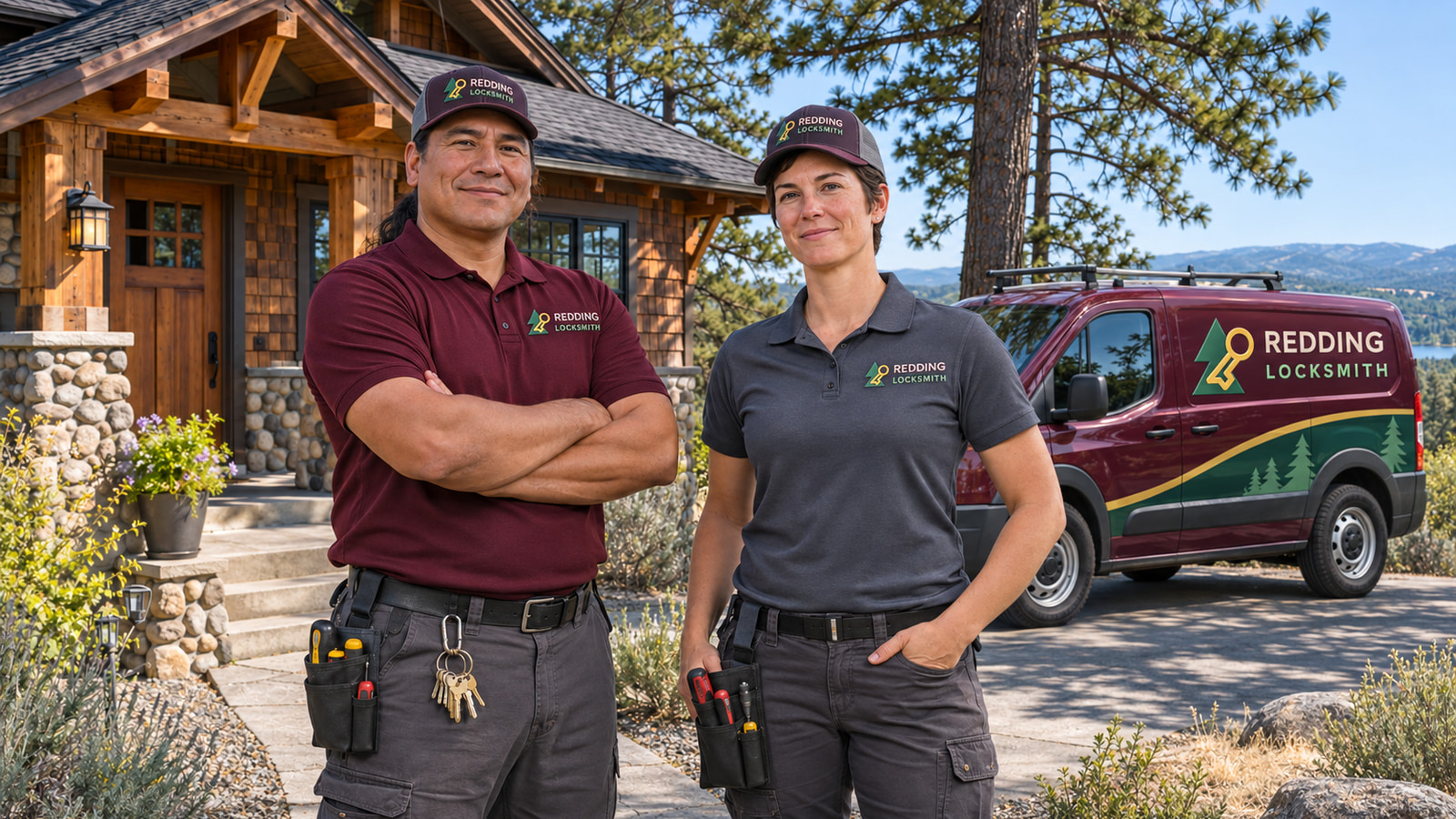
Ask for the name of the person who will come. It is a fair question, and it helps you confirm identity when they arrive. A good provider will say the technician's first name and give a description of the vehicle, such as a van with the business name on the side. If the answer is vague, or if they say that someone will be sent without any details, be careful. A marked vehicle with the business name is a good sign, though not a guarantee.
Ask whether the company works under its own name when it comes to the door. This detail matters. Some call centers answer the phone with one name and dispatch under another, or the technician arrives in an unmarked car and states a different business name. Asking in advance gives you something to compare when they arrive. If the name on the invoice or the vehicle does not match what you were told on the phone, you can decline the work.
Ask whether the business has a physical location or a place where you can find them. A shop is not required for a mobile locksmith, since many work from vans. But the business should have a real presence, such as a listed phone number you can call back, a website with local information, and a service area that makes sense. Be wary of listings that show a street address that turns out to be a vacant lot or a mailbox store.
Here are the identity questions in one place.
- What is the full name of your business?
- Where will the technician be coming from?
- What is the technician's name, and what does the vehicle look like?
- Will the technician arrive under the same business name I am calling?
- Can I call this number back if I need to?
These five questions take a minute. If the answers are clear and calm, that is a good sign. If the person gets defensive, hangs up, or says they cannot tell you, it is better to try another provider. You are not being rude. You are being careful.
One more word about the search results. The first listings in a search are sometimes paid advertisements, and organic listings can be crowded with directory sites. Look for a business with a website that mentions the local area in detail, shows real work, and gives a phone number that rings in the area. A website that lists dozens of cities with the same text is a warning sign. This site is written about Redding and the surrounding communities, and you can judge it by whether it feels like it was written by someone who knows the place.
Questions about price that keep surprises away
Price is the part of a locksmith visit where most disputes arise. The reason is simple. Many jobs cannot be priced exactly over the phone, because the provider does not know what they will find. A door may have a different lock than described. A vehicle may need a special tool. A lock may be damaged. An honest provider handles this by explaining how the price works, not by giving a number that is too good to be true. A dishonest one gives a very low figure to win the call and then raises it at the door.
Begin by asking how the pricing works. Is there a service call charge for coming out, and what does it cover? Is the labor charged separately? Are parts extra? Does the price change at night, on weekends or on holidays? Does distance matter? You do not need a final number if the job depends on circumstances, but you should know the parts of the price. A quote comes after talking by phone, and a complicated job may need a look in person before anything is firm. Beware of any provider who refuses to explain how they charge.
Then ask whether the quote given on the phone is the price you will pay, or whether it is an estimate that could change. If it could change, ask what would cause it to change and by roughly how much. For example, a lockout on a standard door should be simple. If the technician finds a high security lock or a damaged door, the work may differ. A provider who gives you a clear idea of the range and agrees to confirm any change before starting is acting in good faith.
Ask whether the technician will give the final price before beginning work. This is a very important question. The answer should be yes. Once work begins, a lock may be damaged or a door opened, and you lose your ability to say no. A written or spoken confirmation of the price at the door, before tools come out, protects you. If the price at the door is much higher than the phone quote, you can decline, though you may owe a service call charge for the visit. Ask about that charge in advance.
Ask about payment. What forms of payment are accepted? When is payment due? Will you receive a receipt with the business name, the work done, and the amount? A receipt is a basic document, and you should not leave without one. Be cautious if a provider demands cash only and refuses a receipt, or if they ask for payment before doing the work in a way that does not make sense for the job.
Here are the price questions together.
- How is the price built: service call, labor and parts?
- Is the quote you gave me firm, or could it change?
- What would cause it to change, and by how much?
- Will you confirm the final price before you start?
- What do you charge if I decline after you arrive?
- How can I pay, and will I get a receipt?
No prices are stated on this page. The aim is to teach you what to ask, not to set a number. And remember that cheaper is not always better. A very low advertised price often means that the real price will come later. A fair provider is clear and consistent. They want you to feel comfortable and to call them again.
Questions about the work itself and your lock
Once you have a sense of who you are talking to and how they charge, turn to the work. These questions help you understand what will be done to your lock, door or vehicle, and whether the approach suits your situation. They also reveal how much the provider knows about your type of job.
Start with the method. Ask how they plan to open the door, if it is a lockout. A skilled technician has several non destructive methods and will usually try them first. They should be able to say in general terms that they will use specialized tools to open the lock without drilling, and that drilling is a last resort. If the first answer is that they will drill the lock, ask why. Drilling is sometimes needed, especially with a damaged lock or a high security cylinder, but it should not be the default on a standard residential lock. If drilling is needed, ask whether the lock will be replaced and what that would involve.
Ask whether they carry the parts for your job. For a rekey or a lock replacement, the technician may need cylinders, deadbolts, or hardware. A well prepared provider brings a good selection. If they do not carry what you need, ask how long it will take to get it, and whether they can secure the door in the meantime. For a vehicle key, ask whether they can cut and program on site, or whether you will need to go elsewhere. Be honest about the make and model by description, and the provider will tell you what is possible.
Ask about the difference between repair, rekey and replace. Many customers do not know the difference, and a provider should explain in plain words. Repair fixes a worn or broken part. Rekey changes the pins inside the cylinder so that old keys stop working and a new key fits, without replacing the lock. Replace installs a new lock. Ask which is appropriate for your situation, and why. If you have lost a key, rekeying is usually enough. If the lock is damaged or old, replacement may be better. If the provider pushes the most expensive option without explanation, ask for their reasoning.
Ask about the quality of the hardware. What grade is the lock? Is it new, and does it come with a warranty? A warranty on parts and labor shows confidence. You do not need the most expensive lock, but you should know what you are buying. Ask about the strike plate and screws. A strong lock on a weak frame offers little protection.
Ask about proof of ownership. A responsible provider will ask for it. Hearing that question is a good sign. If you are a tenant, be ready to show a lease or confirm with the landlord. If the provider does not ask, consider whether they are being careful with other people's property.
Here are the work questions.
- How will you open or repair this lock, and will you try non destructive methods first?
- Do you carry the parts for this job?
- Do I need a repair, a rekey or a replacement, and why?
- What grade and quality is the hardware, and is there a warranty?
- Do you need proof of ownership before starting?
- Will you test the lock and keys before you leave?
A thoughtful provider will answer these in everyday language. They will avoid jargon, or explain it when they use it. If you do not understand something, ask again. A good locksmith wants you to understand what they are doing.
What should happen when the technician actually arrives
The arrival is the moment where the earlier questions pay off. Before the technician touches your lock, take a minute to confirm a few things. Check that the vehicle and the person match what you were told on the phone. Check the business name. If something does not match, you have every right to decline politely and send them away. You may owe a service call charge for the trip, which is why asking about it ahead of time matters.
The technician should introduce themselves and may offer a business card or other identification. They should ask to see your proof that you live there or own the property, or that you have the owner's permission. Show it. Be patient with this step. It protects you and your neighbors. A technician who is eager to open a door with no check is a concern.
Before work begins, ask the technician to look at the lock and confirm the price. Say something like, based on what you see, what will the total be? Listen to the answer. If it matches the phone quote or falls within the range you were told, you can say yes. If it is much higher, ask why and what the alternatives are. You can decide to proceed, to get another opinion, or to decline. Do not feel pressured. A professional will give you time to decide.
During the work, you are allowed to watch. Many people prefer to stay nearby. A good technician explains what they are doing as they go, or at least answers questions. They should treat your property with care, laying down a cloth if needed and keeping the area clean. If they must make a change, such as drilling, they should tell you first.
When the work is done, test it. Try the new keys in the lock several times. Test the lock with the door open and closed. Check that the old keys no longer work, if you had a rekey. Check that the door latches properly. Ask the technician to demonstrate any special features. For a vehicle, test the key and the remote in the ignition, the doors and the trunk. Do not let the technician leave until you are satisfied.
Ask for a receipt. It should show the business name, date, address, work performed, parts used and total. Keep it. If a warranty applies, make sure it is noted. If you paid by card, check the amount before you sign. Be careful not to sign a blank form or an authorization that is not filled in.
Here is a short list of what to expect.
- Technician and vehicle match what you were told.
- The technician asks for proof you may have the lock opened.
- The final price is confirmed before work begins.
- The work is explained and your property is treated carefully.
- You test the lock and keys before payment.
- You receive a clear receipt.
If anything feels wrong at any point, stop. Say that you are not comfortable and ask the technician to wait while you call someone. If you feel unsafe, move to a safe place and contact the authorities. Rarely does a legitimate provider object to a customer who takes care.
After the job: keeping records and building a relationship
The best time to prepare for a locksmith emergency is before it happens. But if it has already happened, the time after the job is when you can set things up so that next time is easier. Start with your records. File the receipt with your important papers. Note the date, the business name, the work done, and the warranty if any. Take a photo of the receipt and save it on your phone. If you rent, send a copy to your landlord.
Write down key information. Which keys open which locks? Where are the spares? Who has copies? A simple list helps you track access to your home or business. If you had a rekey, note the date. If keys were lost, record when and where. This list is useful when you move, when you hire contractors, and when you need to prove what work was done.
Think about whether the visit revealed other needs. A technician may have noticed worn locks, weak strike plates, or a door that does not close well. A quick conversation can lead to a plan for improvements, done when you are ready. You do not need to decide on the spot, and a good provider will not push. They may mention it so you know, and leave the choice to you.
Consider keeping the number of a trusted local provider where you can find it. Save it in your phone and on paper. When a crisis comes, you will not have to search. A provider you have used before is more likely to know your property and to treat you well. Building that relationship, even through a small job, is useful.
If the experience was good, tell others in the usual way, such as by word of mouth. If it was not, consider reporting concerns to the proper authorities, such as consumer protection offices. This helps protect others. But keep your comments accurate and factual.
Review your locks regularly. Every year or two, walk around your home or business and check each lock. Do keys turn smoothly? Do bolts move freely? Do doors close and latch? Are screws tight? Is the hardware worn? A little attention prevents emergencies. Consider seasonal factors in the Redding area, such as dust and smoke from wildfire season, hot summers that can affect lock lubrication, and winter moisture that can affect metal.
Teach your household. Everyone should know who to call and what to do if locked out. Children and older relatives especially should have a simple plan. Share the key list and the number with those who need it.
Here is a short summary of the questions to keep handy.
- Who are you, where are you based, and who is coming?
- How is the price built, and will you confirm it before starting?
- How will you do the work, and do you have the parts?
- What proof of ownership do you need?
- Will you test everything and give me a receipt?
Keep this list on your phone. A few calm questions put you in control, and the right provider will welcome them. A quote comes after talking by phone, and a complicated job needs a visit in person. When you call a locksmith, any locksmith, you are entitled to answers.